STRATEGIC POSITIONING AND GO-TO-MARKET NARRATIVE
Ten leaders. Ten answers. One buyer who walks.
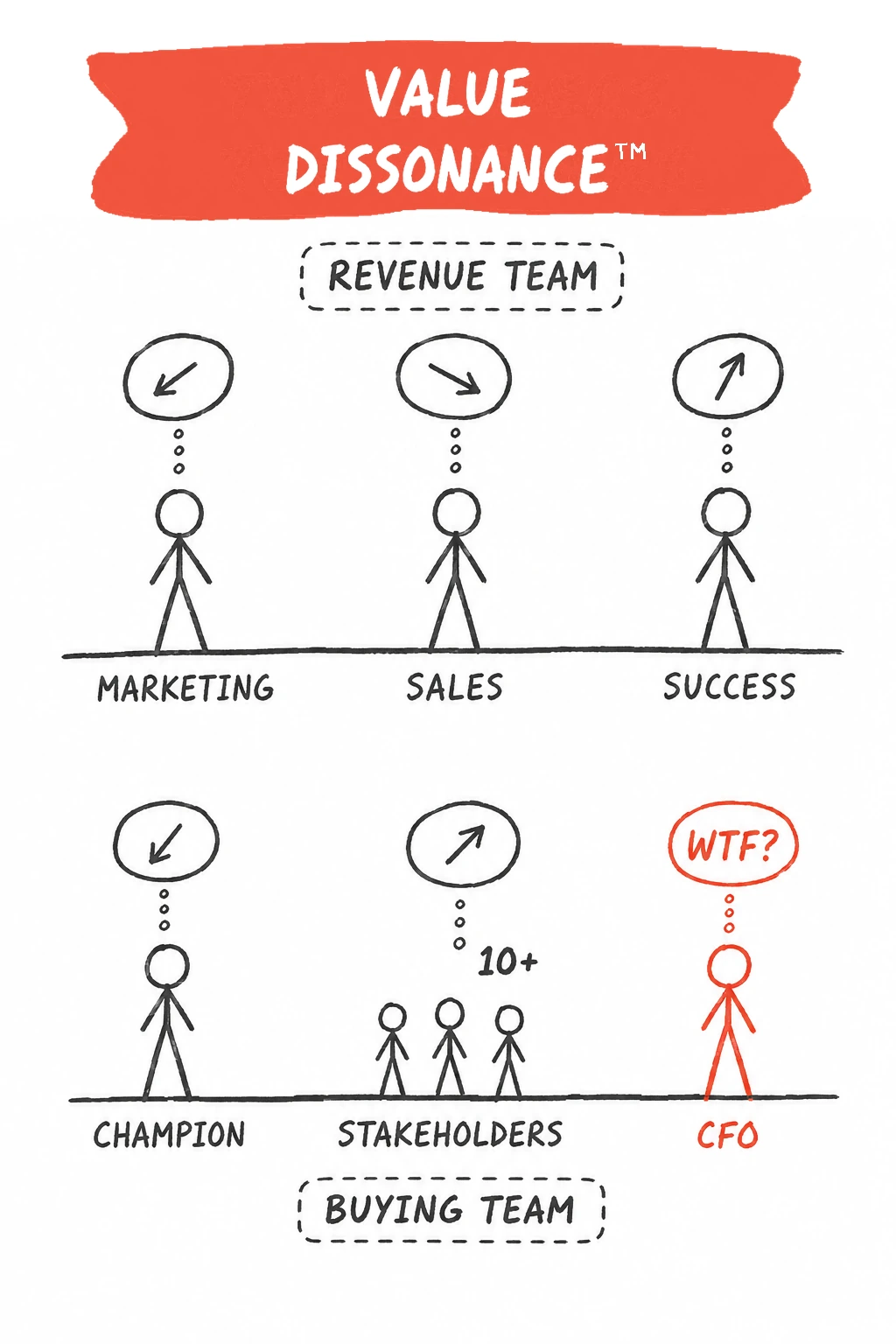
Only 4% of companies surveyed believe they have a clear, consistently understood value proposition (Bain & Company, 2026). When value isn’t clear, marketing says one thing, sales says another, and AI repeats all of it at machine speed. We call it Value Dissonance™.
Seventeen questions. Five minutes. No email required.
PROBLEM
Value Dissonance™.
The clash a buyer feels when everyone representing you tells a different story about your value. It costs you stalled deals, slow ramp, and an AI layer that repeats the confusion on every surface.
That confusion makes buyers hesitate, pushes the conversation toward price, and gives them another reason to do nothing.
Most teams misread it
The pain shows up in the words, so leadership goes and buys better words. A new agency, a fresh messaging framework, a writer with a good portfolio. Six weeks later the deck is sharper and the deals sit exactly where they were.
Nearly half of companies, 49%, say their biggest value proposition problem is core product or service differentiation, which Bain calls an existential issue rather than a communications one (Bain & Company, 2026). You don’t have a messaging problem. You have a positioning problem.
OUTCOME
Unmistakable impact.
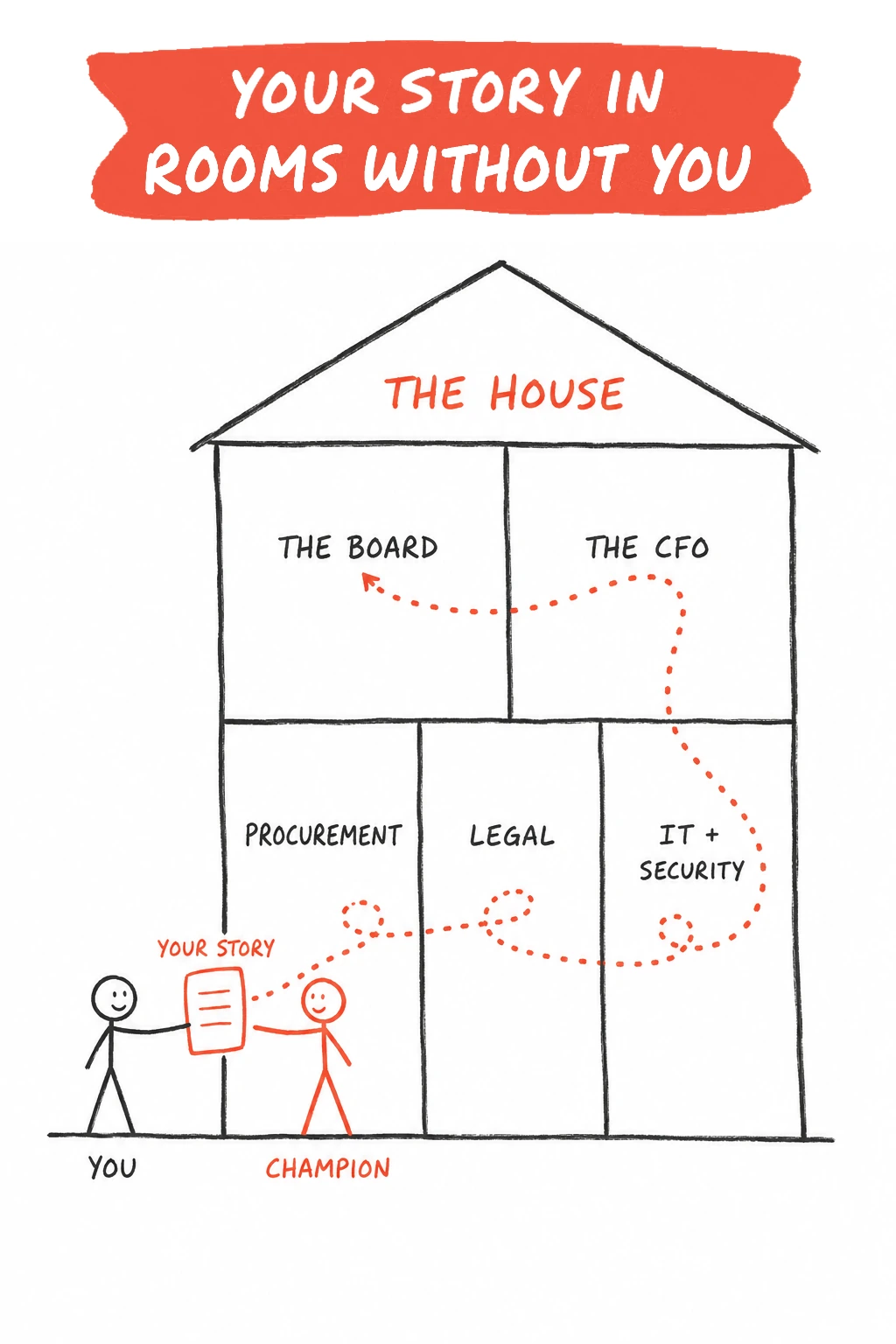
What if every conversation, human or digital, sent a clear signal about your differentiated value proposition? Different people, different conversations, all working in concert. Your champion could carry that clarity into rooms you’ll never enter.
Companies with a clear, consistently understood value proposition reported 19% revenue growth in 2025, compared with 12% for companies with limited or inconsistently communicated value propositions. That’s about 1.6 times as fast (Bain & Company, 2026).
When alignment matters most
At a moment, not a size. A new offering. A new company. A new market. A new partnership. Each one is a launch.
PATH
Narrative spine.
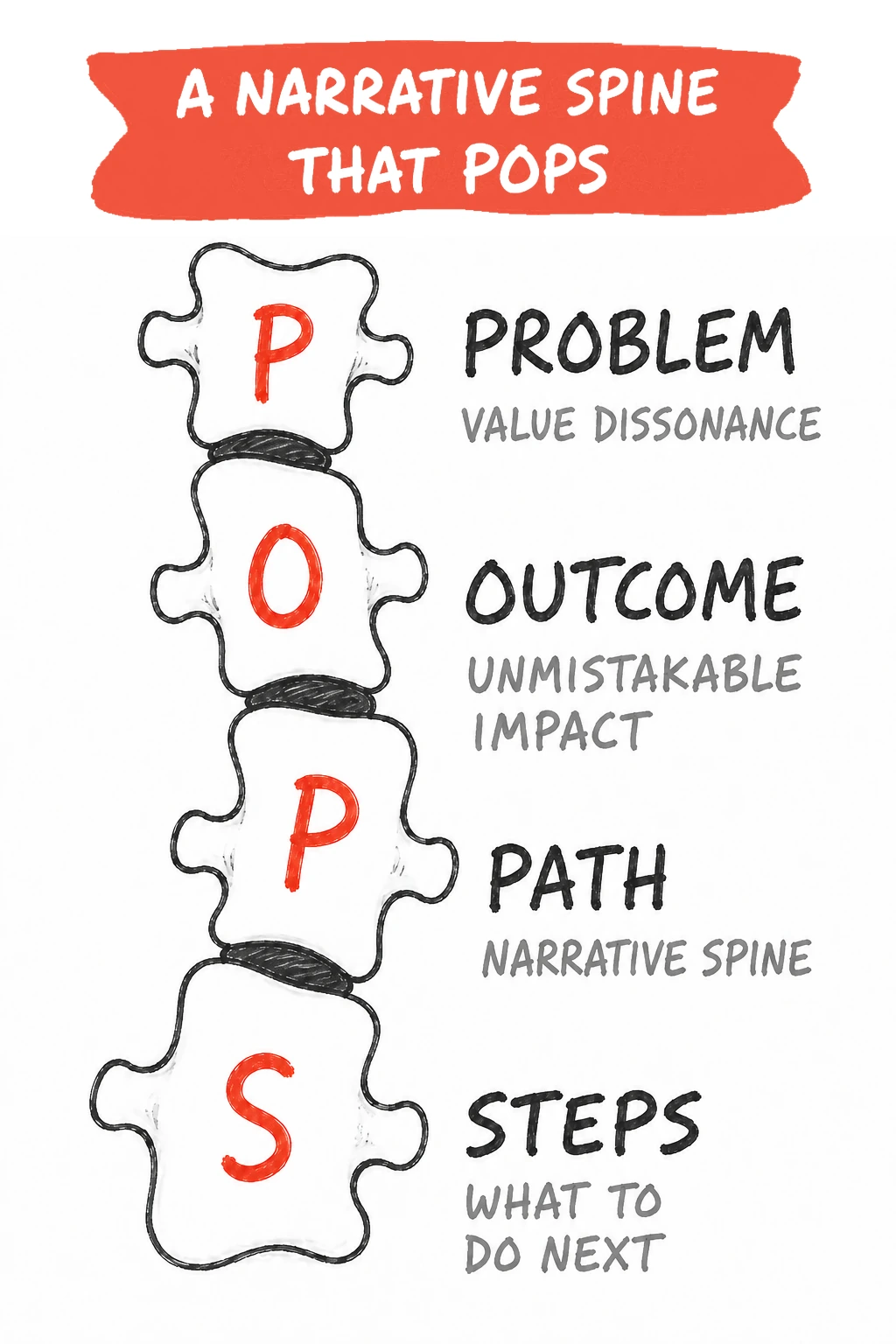
Here’s how we get there. We help you build a clear, consistent narrative around your differentiated value proposition. Your revenue team can use it in their own conversations to help buyers understand why they should choose you over their current situation or any competitive alternative. Four beats. We call it POPS. Not a script, a skeleton. It allows marketing, sales, and success to improvise in front of real buyers and stay on message, and every AI agent inherits it.
Does it work?
A STARTUP
At CoreConnex, a focus group heard the new narrative on a Tuesday. One participant signed with his CEO the next morning. Same product, same buyer, only the story changed.
AN ENTERPRISE
At Tableau, five senior leaders built the narrative in one workshop. It became the company's onboarding and outlasted the people who wrote it.
A NONPROFIT
Vashon HouseHold asks neighbors to fund affordable homes. Same four beats. This isn't sales technique. It's how humans move humans.
“I worked closely with Bruce and his team in putting together a revenue accelerating executive briefing program between HP and Microsoft focused on eight focused solution areas. Our efforts together resulted in over a 50% deal connect rate and us winning the HP Circle Award for Marketing Excellence.”
Inspire Your Buyers®, the Amazon bestseller, 125 ratings and a five-star average.
Work delivered for HP, Microsoft, SAP, Adobe, Oracle, Dell, Citibank, McKesson, Infosys, Unisys, Alcatel-Lucent, Tableau, and Fastly.
STEPS
What happens next
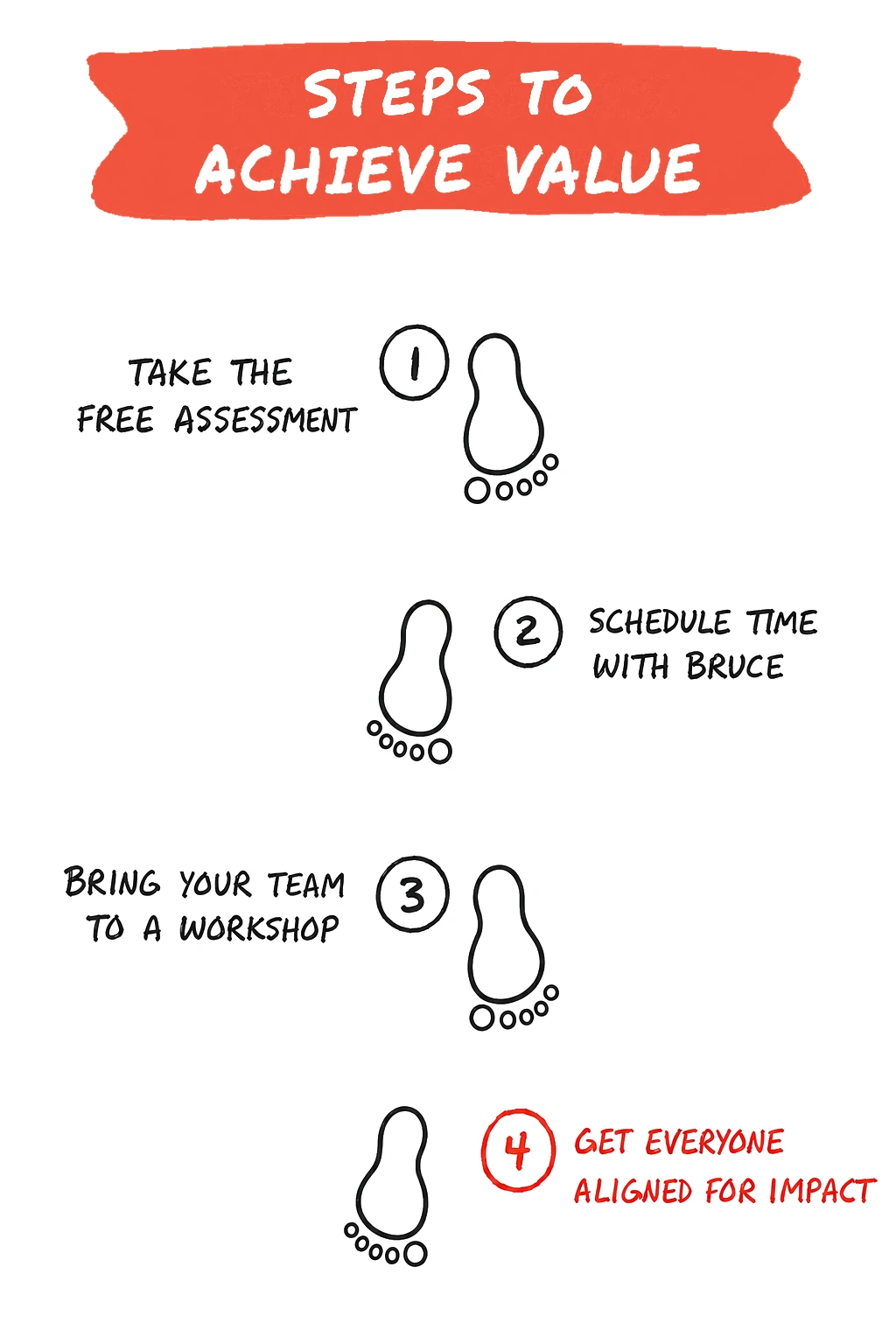
- Take the free assessment. Where your story is drifting and what it's costing.
- Talk with Bruce. Thirty minutes on your results. No obligation.
- Bring your team to a workshop. One room, one narrative spine.
- Get aligned for impact. Product, marketing, sales, and success on the same four beats.
Questions we get.
What is Inspire Your Buyers®?
A go-to-market positioning and narrative consultancy. We help revenue teams find the value their buyers cannot get elsewhere, build a consistent, differentiated narrative, and quantify it in a business case a buyer will defend. Every conversation, human or digital, aligns to that narrative.
What is Value Dissonance™?
The clash a buyer feels when everyone representing a company tells a different story about its value.
Who is this for?
Revenue leaders facing something new: an offering, a market, a partnership, or a newly funded company. It's a big bet, and they can't afford to go to market twice. That takes a high-impact go-to-market narrative, built on a clear, differentiated value proposition their whole revenue team delivers the same way, every time.
How do you get sales, marketing, and customer success aligned?
Alignment is not a meeting problem. It is a narrative problem. When each team builds its own story about your value, buyers hear three different companies and choose none of them. We give the whole revenue team one narrative spine, Problem, Outcome, Path, Steps, so product, marketing, sales, and success describe the same value the same way. Only 4% of companies say they have a clear, consistently understood value proposition (Bain & Company, 2026).
What is a go-to-market narrative?
The consistent story your whole revenue team tells about the value you create, built so anyone can tell it the same way. Ours runs on four beats: the Problem your buyer is in, the Outcome when it is solved, the Path through, and the Steps to get there. It is a skeleton rather than a script, which is why it survives contact with a real conversation.
What is the difference between positioning and messaging?
Positioning is what you are worth to a specific buyer and why you beat every alternative, including the one that wins most often: no decision. Status quo bias takes more deals than any competitor, and buyers buried in contradictory information are 153% more likely to settle for something smaller and safer than they planned (Gartner). Messaging is how you say it. Most teams try to fix a positioning problem with better words, which is why the words keep changing and nothing improves. You don't have a messaging problem. You have a positioning problem.
How do you build a value proposition your whole revenue team can use?
It starts outside, not inside. The positioning framework runs on six ingredients, and the first two look out: overall market context, the trends and chatter your buyers already hear, and alternatives, which is what customers do without you. Only then do we look in at your unique capabilities. The last three put it back in the buyer's terms: meaningful value in their own dollars, the target customers who feel it most and can act, and the category you occupy in their mind. Five of the six are about them. That is why what comes out is differentiated instead of just internally satisfying.
When should a scale-up invest in positioning?
When something is new. A new offering, a new market, a new partnership, or new funding. Those are the four moments when the story you have stops matching the company you are becoming. It is a big bet either way, and you can't afford to go to market twice.
How do you launch a new offering inside a large enterprise?
The hard part is rarely the market. It is the room. A new offering inside an established company competes with every other priority, and your champion has to win arguments you will never be in. We build the narrative and the business case so the story holds up when you are not there to tell it.
How is this different from a messaging framework or a brand agency?
Both work at the communicate layer. We start upstream, at positioning: what you're worth to a specific buyer and why you beat the alternative. We help you define your unique, differentiated value.